
MLB Ballpark Orientation: Why Most Stadiums Face North or Northeast (and What This Means For Shade)
If you’ve attended day games at different Major League ballparks, you may have noticed a particular pattern when looking for seats. Shade often develops on third-base side of the stadium.
That’s not a coincidence, and it starts with how most baseball stadiums are oriented.
While every ballpark is unique, the direction a stadium faces plays a major role in how sunlight moves across the seating bowl throughout the day. And, ultimately, this determines where to find shade at a stadium!
The Rule Behind MLB Stadium Orientation
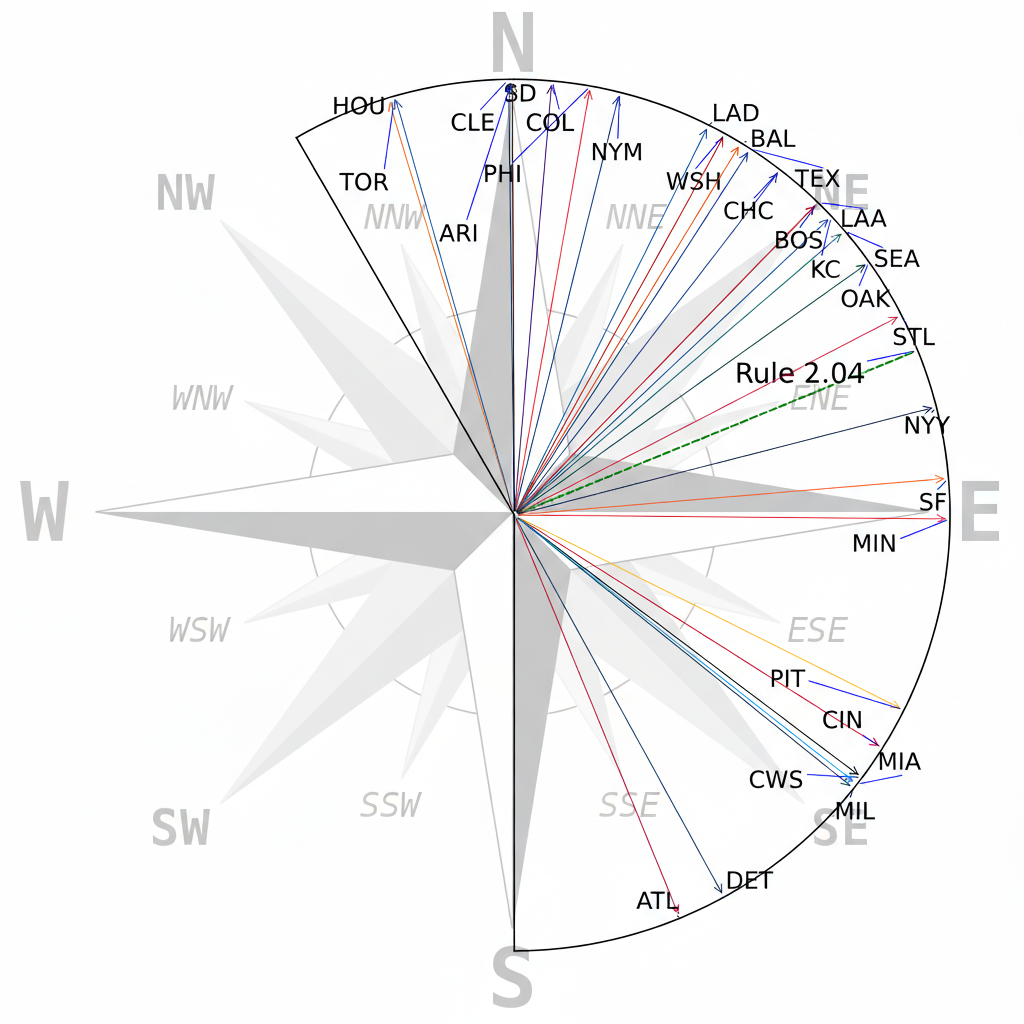
Most modern baseball stadiums are designed so that home plate faces North or Northeast. This guideline comes from long-standing league recommendations intended to protect players, especially batters, from looking directly into the sun during afternoon games.
Rule 2.01 of the Official MLB Rules (opens a PDF) states, “It is desirable that the line from home base through the pitcher’s plate to second base shall run East-Northeast.“
By orienting the field away from the setting sun, stadium designers reduce glare during critical moments of play. This consideration has influenced ballpark design for decades and remains relevant today.
This Isn’t Always Possible
Very few stadiums are aligned to true letter of the rules. Real-world constraints like city grids, nearby roads, coastlines, and existing development often make a perfect alignment impossible.
Instead, most stadiums follow the same general principle: home plate faces somewhere between North and Northeast. This still keeps the sun behind the batter for much of the afternoon and creates similar lighting conditions across different venues.
For fans, this consistency leads to repeatable shade patterns from stadium to stadium.
How Stadium Direction Affects Shade for Fans
As the sun moves across the sky during the afternoon, it shifts toward the western horizon. In stadiums that face north or northeast, this means sunlight enters the seating bowl from the first base and right field side.
As a result:
- The first base side tends to receive more direct sun during day games
- The third base side often gains shade earlier as the sun lowers
- Upper seating and overhangs amplify this effect by blocking sunlight sooner
This is why fans looking for shade often have better luck on the third base side, particularly in elevated or covered sections.
Why 3rd Base is Usually the Best Choice for Shade
Because of how most stadiums are oriented, the third-base side sits opposite the sun’s primary path during afternoon hours. While this doesn’t guarantee shade in every seat, it generally offers a relative advantage over the first base side.
This pattern holds true across many ballparks, which is why it comes up repeatedly in seating advice.
Even within the same stadium, shade can vary by row depth, seating height, and time of year. That’s why shade guidance should focus on patterns, not guarantees.
What This Means When Choosing Seats
Understanding stadium orientation gives fans a useful starting point when buying tickets for a day game and looking for ways to stay cool during a game.
If shade matters:
- Start by looking at the third-base side
- Favor upper seating or sections with overhead cover
- Be cautious with first-base and right field seating for afternoon starts
- Remember that structure often matters more than exact start time
Knowing how stadiums are designed makes it easier to avoid sitting in direct sun for long stretches.
Choose Wisely!
Stadium direction directly improves playability on the field. That same design choice also shapes where shade tends to develop for fans during day and afternoon games.
While no stadium offers perfect shade everywhere, understanding these patterns can help you make better seat choices!